Forget the simple upward-sloping line. Forecasting global electricity demand is no longer a straightforward exercise in extrapolating past GDP growth. We're at a hinge point. The consensus is clear—demand is set to rise significantly over the next two decades. The International Energy Agency (IEA), in its World Energy Outlook 2023, projects global electricity demand could increase by over 80% by 2050 in their most ambitious scenario. But the "how" and "where" of that growth are fracturing into a complex mosaic, driven by technologies that didn't exist twenty years ago and policies that are still being written.
The old models are struggling. A forecast that doesn't deeply account for the simultaneous pressures of mass electrification, data center explosion, and climate adaptation isn't just inaccurate; it's a potential blueprint for grid instability and missed economic opportunities.
What's Inside?
The Four Core Drivers Reshaping the Forecast
If you want to understand where demand is headed, watch these four forces. They're interacting in ways that create both predictable trends and surprising volatility.
1. Electrification of Transport and Heat
This is the big one. Every electric vehicle (EV) charger and heat pump is a new, often sizable, load on the grid. The scale is staggering. BloombergNEF estimates EVs alone could add over 5,700 TWh of global electricity demand by 2050—that's more than the total electricity consumption of the United States and the European Union combined today. But here's the nuance everyone misses: it's not just about the number of units sold. The charging behavior is the wildcard. If 80% of EVs charge during peak evening hours in a neighborhood with old transformers, the local forecast is useless. Smart charging and vehicle-to-grid (V2G) tech could flatten this curve dramatically, but adoption rates are a major uncertainty.
2. The Data Center and AI Boom
This is the new, unpredictable variable. A large data center can consume as much power as a medium-sized city. The generative AI revolution is turbocharging this. Training a single large AI model can use more electricity than 100 US homes consume in a year. Companies like Amazon, Google, and Microsoft are signing direct power purchase agreements (PPAs) for gigawatts of renewable energy, but they still pull from the grid when the sun isn't shining or the wind isn't blowing. Forecasters are scrambling to model this, and many legacy models are underestimating its impact.
A Quick Snapshot: Projected Demand Growth by Sector (IEA, Net Zero Scenario to 2050)
The shift is stark when you break it down. While industry remains a major consumer, the growth engines are clearly elsewhere.
| Sector | Key Driver | Estimated Contribution to Demand Growth (to 2050) | Forecasting Complexity |
|---|---|---|---|
| Transport | Electric Vehicles (Cars, Trucks, Buses) | Very High | High (Behavioral patterns, grid integration) |
| Buildings | Heat Pumps, Electric Cooling | High | Medium-High (Weather dependency, retrofit rates) |
| Industry | Electrification of Heat (e.g., Hydrogen, Electric Arc Furnaces) | Moderate-High | Very High (Technology cost breakthroughs, policy) |
| Data Centers & Digital | Cloud Computing, AI, Cryptocurrency* | Rapidly Increasing (High Uncertainty) | Extreme (Pace of innovation, efficiency gains) |
*Cryptocurrency mining demand is highly geographically mobile and policy-sensitive, adding another layer of locational uncertainty.
3. Industrial Decarbonization
Steel, cement, chemicals—these are the hard-to-abate sectors. The pathway to net-zero runs directly through them, and it likely involves massive electrification. Think electric arc furnaces for steel or electric boilers for low-grade heat. The demand potential is enormous, but the timeline is fuzzy. It hinges on green hydrogen becoming cost-competitive and carbon pricing mechanisms that are politically fraught. Most forecasts have a wide band of uncertainty here.
4. Climate Change Itself
This is the feedback loop. A warmer planet means more air conditioning. The IEA notes that in hotter regions, cooling could become the largest driver of peak electricity demand. Conversely, milder winters in some areas could reduce heating demand. But extreme weather events—heatwaves, cold snaps, droughts that hamper hydropower—are becoming more frequent. These events don't just increase demand; they can simultaneously knock out supply, creating spikes that traditional forecasts based on average weather patterns completely fail to capture.
The Biggest Challenges in Forecasting Today
Pulling a number out of a model is easy. Standing by its accuracy is hard. Here's where the real work happens—and where forecasts often go quietly wrong.
Policy Whiplash. A change in administration can scrap subsidies for EVs or heat pumps overnight. A national security concern can fast-track a semiconductor fab (a huge electricity user) in a location the grid wasn't prepared for. Forecasts have to build in political risk, which is more art than science.
The Efficiency Wild Card. Will improvements in appliance and industrial process efficiency offset new demand? Historically, yes, to a degree. But the relationship is breaking down. A more efficient data center server is often offset by deploying ten times more servers. An efficient heat pump still uses more electricity than the gas boiler it replaces. The net effect is a major debate among forecasters.
Consumer Behavior. This is the soft, messy human element. Will people accept smart thermostats that adjust their home temperature? Will fleets adopt managed EV charging? Adoption rates for these demand-side solutions are notoriously difficult to predict and vary wildly by culture and economic incentive.
A Personal Observation: Having reviewed utility integrated resource plans (IRPs) for years, I've seen a consistent blind spot. Forecasters are great at modeling the energy needed (total gigawatt-hours per year) but often underplay the power challenge (peak gigawatts needed on a Tuesday evening in July). The grid must be built and financed for that peak, not the annual average. A forecast that shows modest annual growth but a skyrocketing peak demand is a recipe for blackouts.
A Tale of Two Grids: Regional Variations
The global story masks stark regional divides. You can't apply the same logic everywhere.
Asia Pacific (especially China & India): This is the engine of global demand growth. Rising incomes, rapid urbanization, and industrial expansion are the primary drivers. Electrification of transport and heat is starting but is a secondary factor for now. The forecasting challenge here is keeping up with the sheer pace of economic development and government infrastructure plans.
North America & Europe: Here, demand growth is more muted in mature economies, but the composition of demand is changing radically. Growth is almost entirely driven by the four core drivers listed above—EVs, data centers, heat pumps, and industrial shifts. The forecasting challenge is less about GDP and more about technology adoption curves and policy support. Grid modernization, not just expansion, is the critical need.
Africa: The continent with the largest unmet electricity demand and population growth. The forecast here is a story of potential. Will development leapfrog to distributed solar and minigrids, or follow a centralized grid model? The answer will dramatically shape the demand profile and the infrastructure required.
Common Mistakes in Interpreting Demand Forecasts
Let's clear up some confusion. When you read a forecast, avoid these pitfalls.
Treating a Single Scenario as a Prediction. Reputable agencies like the IEA or the U.S. Energy Information Administration (EIA) publish multiple scenarios (Stated Policies, Announced Pledges, Net Zero). Each is a plausible pathway based on different assumptions about policy and tech. The "Net Zero" scenario is not a forecast; it's a roadmap of what needs to happen. The "Stated Policies" scenario is closer to a business-as-usual forecast, but it can be overly conservative if policies accelerate.
Ignoring the Error Bars. All forecasts have a range of uncertainty, especially the further out they go. That range is often the most important part. A forecast of 2-4% annual growth is very different from a confident prediction of 3%.
Confusing "Demand" with "Need." In many developing regions, economic demand (what people can pay for) is far below the actual need for electricity. Forecasts often measure the former. A surge in affordable solar home systems could unlock a vast wave of latent demand that never appeared in the official models.
Exploring Future Scenarios: Stated Policies vs. Net Zero
To make this concrete, let's look at how two different worlds might unfold, using the IEA's frameworks as a guide.
In the Stated Policies Scenario (STEPS), governments only follow through on policies already firmly enacted into law. Electrification progresses, but slowly. Fossil fuels remain a significant part of the power mix. Global electricity demand grows steadily, driven by Asia and incremental adoption elsewhere. The grid evolves but struggles with reliability during transitions.
In the Net Zero Emissions by 2050 (NZE) Scenario, the world gets serious about climate targets. Policy is aggressive and coordinated. Electrification is rapid and widespread across all sectors. Demand grows even faster—because you're powering cars, heating, and industry that used to run on fossil fuels directly. But this demand is met by a massive, parallel build-out of renewables, nuclear, and grid flexibility (storage, demand response). The challenge here is the sheer speed and scale of the build-out, not the lack of clean energy potential.
The takeaway? Higher electricity demand is not inherently incompatible with decarbonization. In fact, in a net-zero world, they go hand-in-hand. The problem is building the clean generation and grid infrastructure fast enough to meet that rising demand.
Your Questions on Electricity Demand Forecasts
How do forecasters account for the explosive growth of AI data centers, given how quickly the technology changes?
They're playing catch-up, honestly. Traditional models use historical correlations between GDP and IT load, which are now obsolete. The best forecasts now incorporate bottom-up analysis from industry reports (like those from Dell'Oro Group or Synergy Research Group) on planned data center capacity and chip efficiency trends. They also track corporate Power Purchase Agreements (PPAs), which are a leading indicator of future demand. But there's a wide margin of error. A breakthrough in liquid cooling or more efficient AI chips could significantly dampen the demand curve, while a new, compute-hungry application could send it soaring.
Will the push for energy independence and reshoring of manufacturing significantly alter regional forecasts?
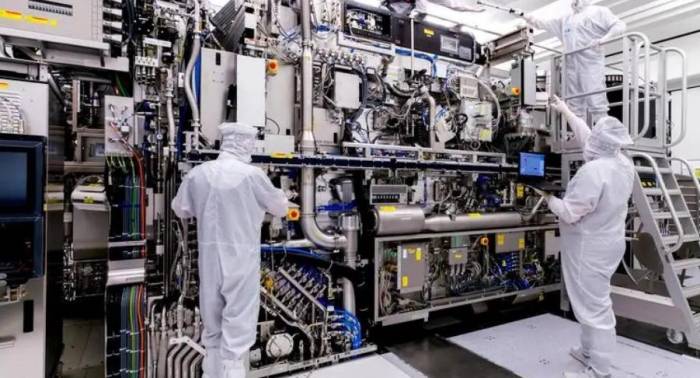
Absolutely, and this is a point often underweighted in global models. The CHIPS Act in the US and similar policies in Europe are explicitly designed to build more semiconductor fabs locally. A single advanced fab can consume 100 MW or more—equivalent to a small power plant's output. This isn't diffuse demand; it's a massive, new, 24/7 industrial load plopped onto a specific substation. Regional forecasts in places like Arizona, Ohio, or Germany's Saxony need radical revision. The grid connection queues in these regions are telling the real story.
My utility is forecasting low demand growth, but I keep hearing about grid strain. What's the disconnect?
You've hit on the critical flaw in many local forecasts. The utility is likely looking at annual energy growth across its entire service territory, which may be low. But strain comes from peak power demand and locational issues. A few neighborhoods with high EV and heat pump adoption can overload local distribution transformers long before the utility's total sales show a blip. Furthermore, as we add intermittent solar, the net demand curve (load minus solar) can become a "duck curve" with a steep, fast-ramping evening peak that's harder and more expensive to meet. Ask your utility for their peak demand forecast and their distribution-level "hot spot" analysis, not just their total sales forecast.
The global electricity demand forecast is no longer a sleepy academic exercise. It's a dynamic, high-stakes puzzle that sits at the center of climate action, economic competitiveness, and national security. The numbers tell a story of growth, but the subtext is all about transformation—of our infrastructure, our policies, and ultimately, how we power every aspect of modern life. Getting the forecast right means we can build a grid that's ready. Getting it wrong means we'll be constantly scrambling to catch up.